AGRITECH TASK 4.2.3
Farm information systems and operational monitoring in smart agriculture
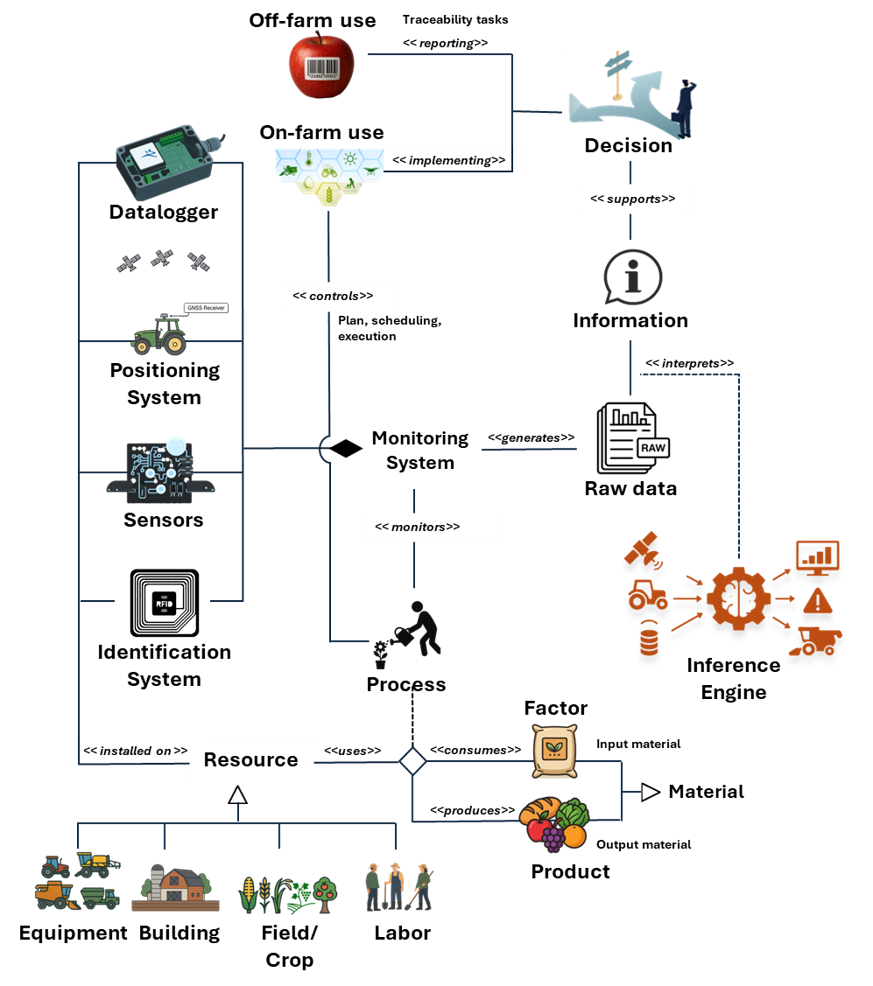
AFILAB’s operational monitoring activities are linked to the design of information systems for agricultural businesses, with a view to creating a coherent, modular and flexible structure in which to store the data collected and develop inference engines to extract information for management and traceability purposes.
Operational monitoring involves collecting data in real time, describing how production processes are carried out.
The aim is to provide a time-scale record of the process sequence with all the details relating to the consumption and generation of materials or energy, thus reconstructing the historical memory of agricultural activities.
In the case of field operations, such as crop care, tillage, sowing or harvesting, the identification of the workplace plays an essential role.
In the case of stationary processes, including storage facilities, operational monitoring can also be related to the monitoring of the flows of materials stored there.
The fundamental components of an operational monitoring system are identification systems to detect all agents involved in a process, including power units (e.g. tractors), implements (e.g. implements) and workplaces (e.g. fields).
The information obtained is intended to support immediate or deferred actions. In the first case, we can talk about fully automated decision-making processes that take place directly in the field (e.g. automated variable rate treatments). The second case concerns the use of information in deferred decisions, with the necessary archiving of operational details and their integration with other information collected over time both inside and outside the company (e.g. prescriptive maps).
The possibility of automatic monitoring of activities offers several advantages, the main ones being:
- the possibility of pre-compiling activity logs, replacing the actual compilation work with checking and any necessary corrections and additions;
- the availability of operational and management information that is always available for short-, medium- and long-term activity planning;
- the possibility of supporting forms of certification by third parties in a more efficient and transparent manner.
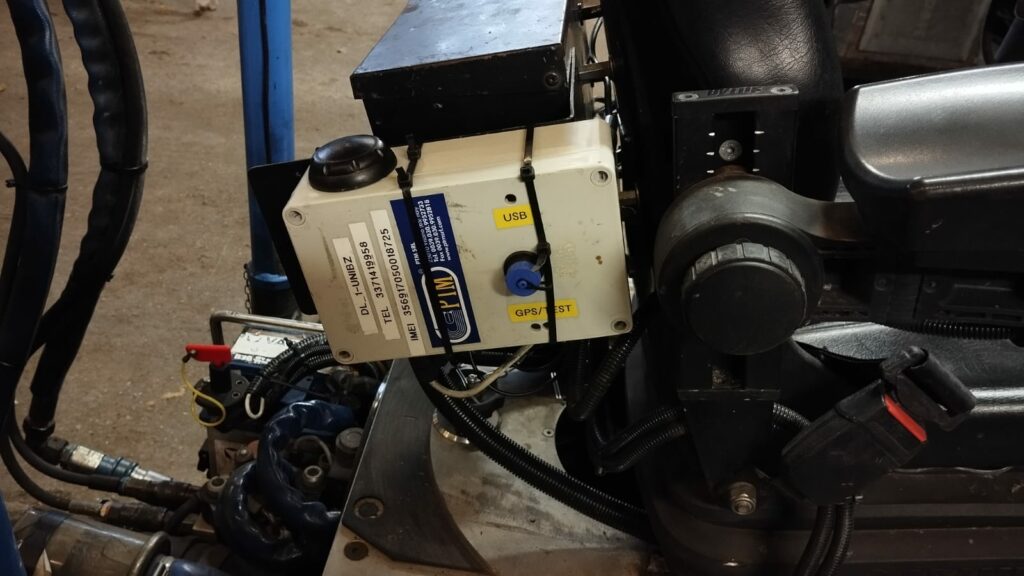
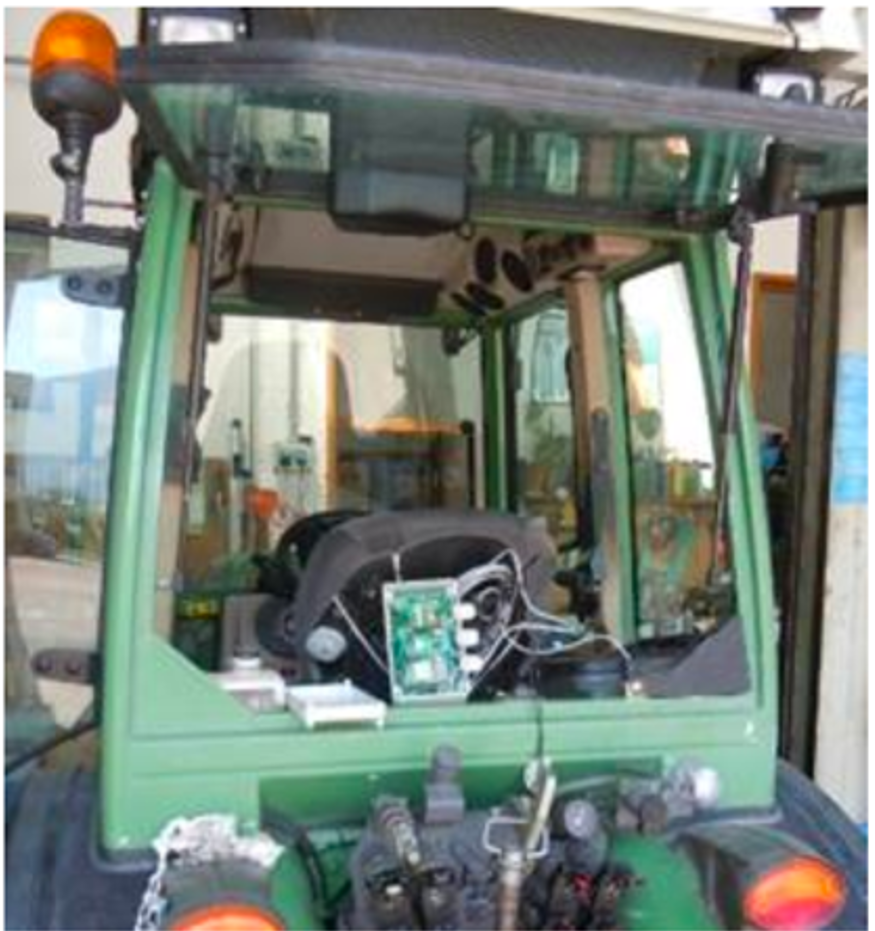
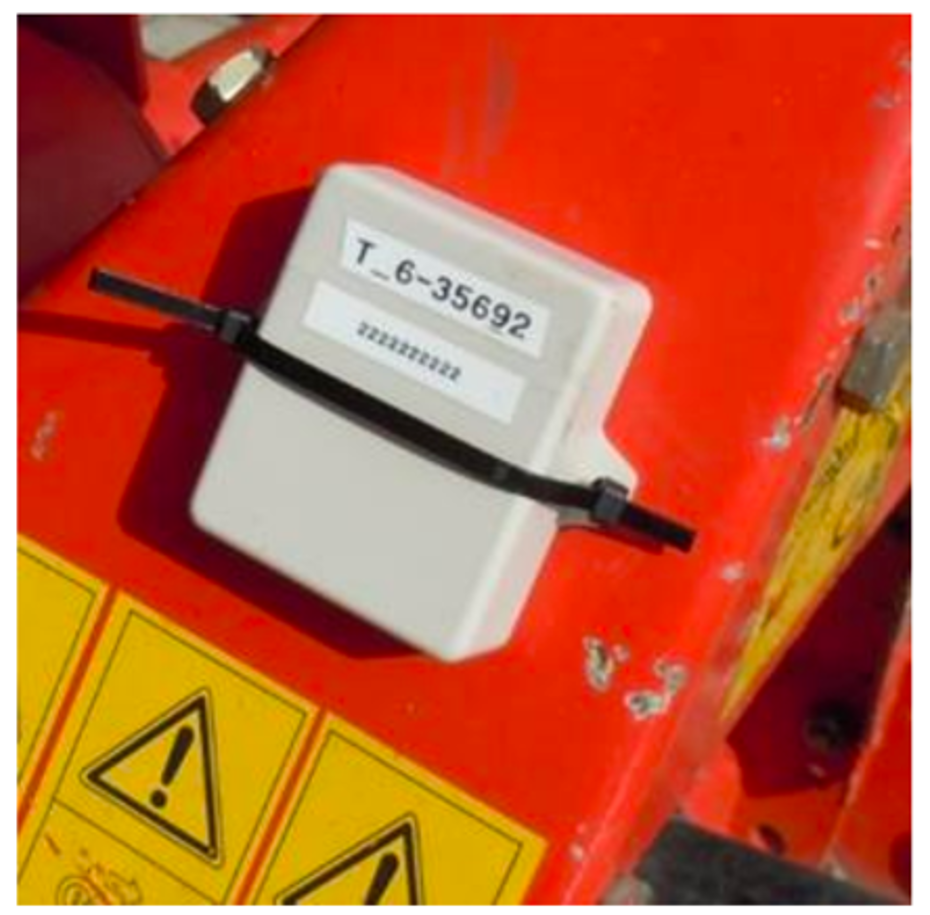
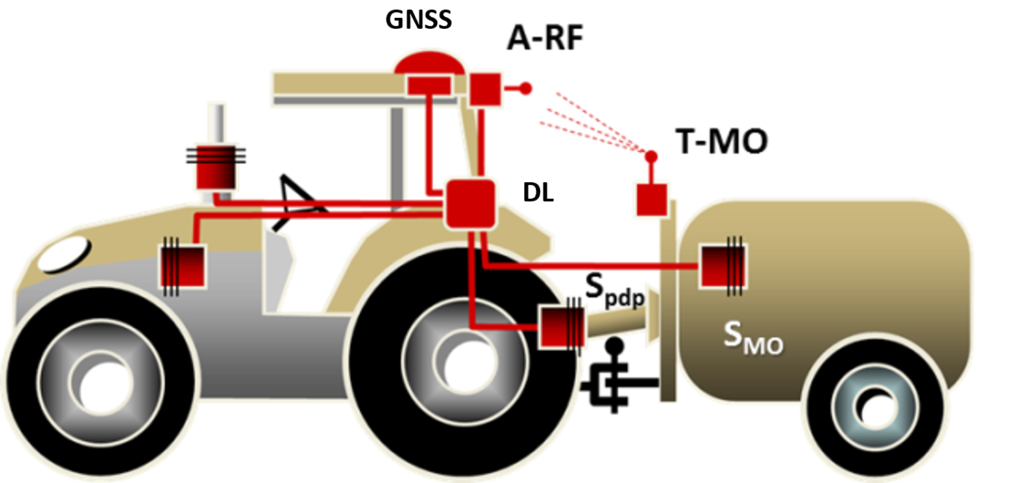
Research has focused on monitoring various mechanised agricultural activities carried out in open fields. All the machines monitored were equipped with a data logger (tractors) or an active RFID transponder (implements). Both devices feature a unique code used to identify the machine on which they are installed.
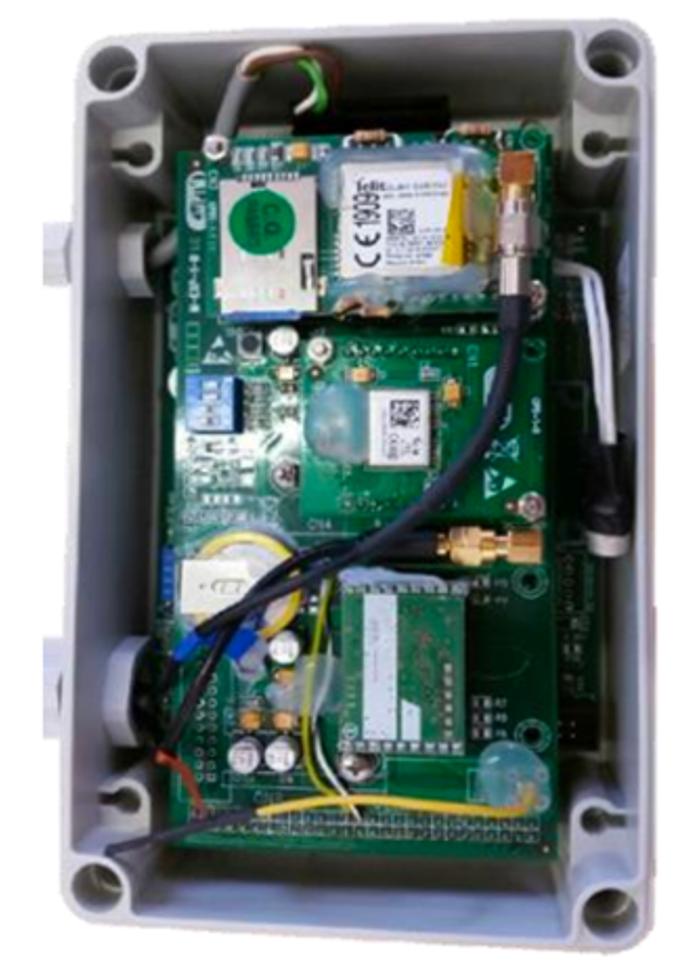
The transponder, installed on the implements, is activated by the vibrations caused by the movement of the machine itself and begins to transmit its identification code via radio frequencies. This is read by the data logger and stored in its internal memory in data packets ready to be sent to a remote server via GPRS connection or manually downloaded via USB stick.
In addition to this information identifying the tractor-implement combination, the data logger, being equipped with a GNSS unit, also acquires the position to provide geographical information.
This data, automatically analysed by the ad-hoc developed inference engine, is translated into information concerning, for example, mechanisation costs, working times, working areas, fuel consumption and GHGs emissions.